



By Aldair Marins
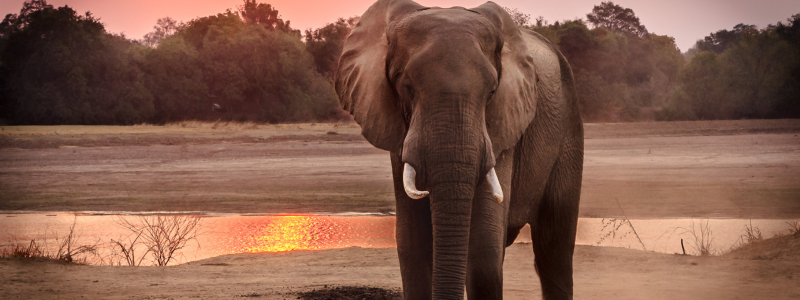
Violent interventionism, the theft of natural ethos and, consequently, the silencing of vital expressions have imposed a cruel fate on Puppy, Kuky and Sandro. For around three decades, these elephants were held in captivity, deprived of the exercise of their natural ethos, in other words, deprived of being who they are.
Kuky’s vital impulse was tragically extinguished in October 2024, in the presence of her companion Puppy. Both African elephants had been taken to the Ecoparque Zoo in Buenos Aires, where they lived under conditions that neglected their physical, emotional and social needs.
Recently, Puppy, now 36 years old and born in Kruger National Park, South Africa, undertook a journey of 2,690 kilometres to Brazil. She will now live at the Elephant Sanctuary Brazil (SEB), located in Chapada dos Guimarães, in the state of Mato Grosso, a place that offers an environment more compatible with her nature and wellbeing. Similarly, the elephant Sandro, who lived for decades at the “Quinzinho de Barros” Municipal Zoo in Sorocaba, São Paulo, Brazil, was also confined under conditions that failed to meet even his most basic needs for movement and comfort. Following a court decision, Sandro is also due to be transferred to the same sanctuary as Puppy. The stipulated deadline is 45 days, under penalty of a fine that could reach R$300,000 if the municipality fails to comply.
While each case holds its own particularities, they are not isolated events. Rather, they reveal a structural continuity in the institutionalised culture of violence against non-human animals, a legacy anchored in a civilisational logic that, since the rupture between theocentrism and rationalism in the seventeenth century, has entrenched a divide between humanity and nature. The rise of the mechanistic paradigm, which seeks to instrumentalise and dissociate the human from the non-human, laid the groundwork for systems of domination over other beings, legitimising supremacist, speciesist and eco-zoocidal regimes.
In the legal realm, this same logic is reproduced. Modern legal traditions, particularly those grounded in natural law and contract theory, have shaped a juridical framework that excludes sentient beings from the sphere of justice. Rather than recognising them as subjects, it relegates them to the status of objects, legitimising their large-scale exploitation and extermination.
However, recent developments, such as those involving Puppy and Sandro, emerge as urgent calls to rethink legal structures and to confront the anthropocentric foundations of Western legal tradition. They demand a radical openness to alterity, a critical, sensitive and unconditional responsibility towards the Other, including the non-human other. This
shift involves resisting assimilation and domestication, and instead recognising the ethical legitimacy that arises from the exposure to the Other’s vulnerability, which precedes any contract or formal recognition.
To transpose this conception into the legal field is to propose the overcoming of the anthropocentric axis that underpins Western law. Interspecies justice involves a welcoming and sensitive listening, a reorganisation of the very notion of world, and of what it means to ethically and juridically emancipate those rendered subordinate by the human monopoly on the value of life.
Thus, the struggle for animal rights transcends protective or welfare-based approaches. It is inscribed in the horizon of a post-anthropocentric, ecological and sensitive justice, one that seeks to dismantle the paradigms of modernity and to build a cosmopolitics where legal recognition and protection extend to all living beings.
References:
CNN Brazil. African elephant Puppy arrives at sanctuary in Mato Grosso. Available at: https://www.cnnbrasil.com.br/nacional/centro-oeste/mt/elefanta-africana-pupy-chega-a-santuario-em-mato-grosso/
CNN Brazil. Elephant Puppy leaves Argentina and is on her way to a sanctuary in Brazil. Available at: https://www.cnnbrasil.com.br/nacional/centro-oeste/mt/elefanta-pupy-deixa-argentina-e-esta-a-caminho-de-santuario-no-brasil/
G1 Globo. Justice orders the transfer of elephant Sandro from Sorocaba zoo to sanctuary in Mato Grosso. Available at: https://g1.globo.com/sp/sorocaba-jundiai/noticia/2025/04/25/justica-determina-que-elefante-sandro-seja-transferido-do-zoologico-de-sorocaba-para-santuario-no-mt.ghtml
About the author Aldair Marins
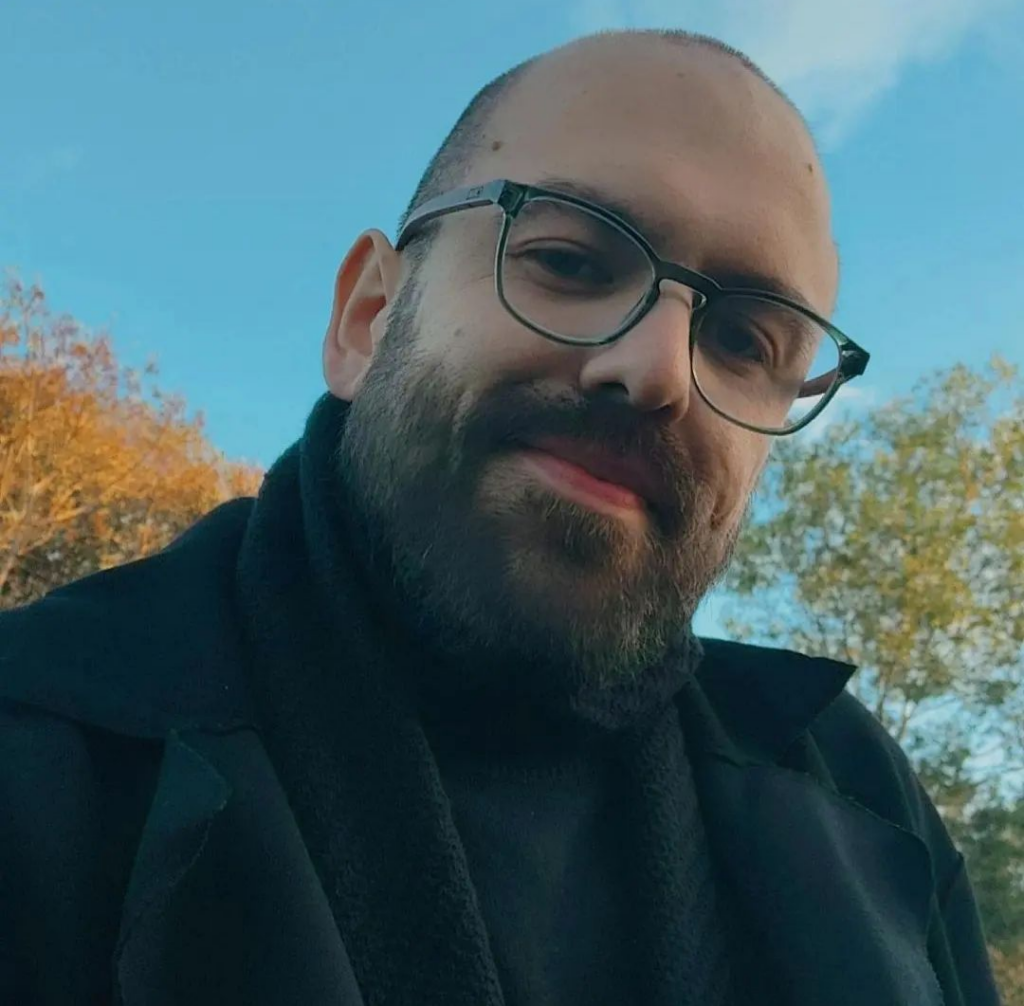
My name is Aldair Marins. I live in Porto Alegre, in the state of Rio Grande do Sul, Brazil. I hold a Bachelor’s degree in Philosophy from the University of Passo Fundo (UPF) and I am currently a Master’s student in Philosophy at the Pontifical Catholic University of Rio Grande do Sul (PUCRS). I work as a researcher in the fields of Animal Ethics and the Ethics of Otherness. I am affiliated with the Feminist Studies Group at the University of Passo Fundo (UPF); the Research Group on Language, Society, and Writing from an Enunciative Perspective at the Federal University of Rio Grande do Sul (UFRGS); the “Living Between Languages” research group coordinated jointly by the Federal University of Rio Grande do Sul (UFRGS) and the Catholic University of Pernambuco (UNICAP); the Research Group on the Ethics of Otherness and Critiques of Violence at UPF; a member of the Animal Rights Research Group (GPDA), linked to the Law Graduate Programme at the Federal University of Santa Maria (UFSM); and a member of ZOOPOLIS, associated with the Animal Law Research Centre within the Law Graduate Programme at the Federal University of Paraná (UFPR).