



By Luana Elena Miu
What if a polluted river could take its polluter to court? What if a forest had a legal right to exist, not just because it’s nice for us to look at, but because it has a right to thrive? This is the radical idea at the heart of the Nature’s Rights Bill [HL], a new piece of legislation currently making its way through the House of Lords.
Introduced by Baroness Bennett of Manor Castle, this Private Member’s Bill proposes a fundamental shift in UK environmental law1. While its path to becoming law is uncertain, it has ignited a vital debate: Is it time to move beyond seeing nature as a resource and instead recognise it as a legal subject with rights of its own?
A Radical New Approach
UK environmental law has been anthropocentric, or human centred. We protect nature because of what it provides us with – clean water, pollination and beautiful landscapes. It is treated as property, something to be managed and owned2. However, the Nature’s Rights Bill flips this idea on its head. It argues that nature has intrinsic value, meaning it is valuable in and of itself, not just for the benefits it gives to people. The Bill proposes that nature should be recognised as a “legal subject and rights-bearing entity”, changing the basis on which decisions affecting nature are made3.
What Rights Would Nature Have?
The Bill outlines fundamental rights for nature, including:
- The right to exist.
- The right to regenerate and evolve.
- The right to restore its ecological integrity.
- The right to maintain its natural functions.
These rights would apply to ecosystems, habitats and species. It’s important to note that this would not give the public new rights to access private land. Instead, it creates a legal duty for anyone making a decision, from government ministers to developers, to consider how that decision might impact the rights of nature before any damage is done. This is a crucial shift from the current approach, which often focuses on compensation after harm has already occurred4.
How Would It Work in Practice?
A bill is only as good as its enforcement, and this Bill proposes a detailed governance structure to make the rights a reality. Key elements include:
- A Nature Guardianship Council and regional Bioregional Councils to provide guidance and monitor compliance.
- A dedicated Nature’s Rights Tribunal to hear disputes related to the Bill.
- Rights Impact Assessments, requiring decision-makers to formally assess how their policies might affect nature’s rights.
Public authorities and businesses would also be placed under a legal “duty of care” towards nature, meaning they could be held liable for failing to protect its rights5.
What Would This Mean for Animals and the Environment?
While not primarily an animal welfare bill, the potential positive impact on wildlife would be immense. By protecting entire ecosystems – rivers, woodlands and wetlands – the Bill protects the very habitats that animals depend on. Healthier ecosystems mean more food, better shelter and more resilient populations for species like otters, red squirrels and a variety seabirds. It’s a holistic approach that protects the whole web of life, not just individual species in isolation.
A Global Movement
The UK is not alone in exploring this idea. In 2008, Ecuador became the first country in the world to enshrine the Rights of Nature in its national constitution, with Article 71 declaring that nature ‘has the right to have its existence fully respected, as well as the maintenance and regeneration of its vital cycles, structures, functions, and evolutionary processes’6. In 2017, New Zealand granted legal personhood to the Whanganui River through the Te Awa Tupua (Whanganui River Claims Settlement) Act 2017, recognising the river as a legal entity with its own rights7.
This international movement has inspired actions closer to home. In February 2025, Lewes District Council became the first local authority in England to endorse a Charter for the Rights of the River Ouse, recognising the river’s right to flow, be free from pollution and sustain native biodiversity8. While the charter did not grant the river legal personality as it would require primary legislation passed by the UK Parliament, it has instead marked a significant step in raising awareness and embedding nature-centred values in local decision-making9.
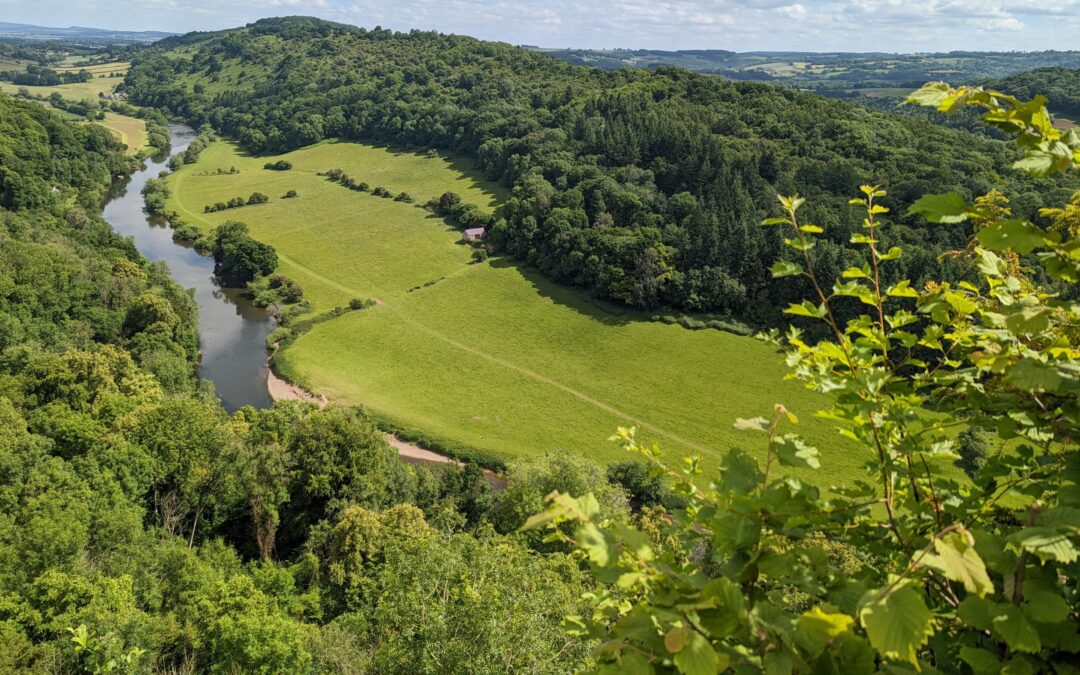
Since then, a growing number of councils have followed suit. Basingstoke and Deane Borough Council passed a motion in May 2025 recognising the rights of local rivers and chalk streams, having adopted a Declaration on the Rights of Rivers in March 202610. Maidstone Borough Council has gone further, becoming the first UK council to formally embed a Rights of Nature framework into its governance, decision-making and service delivery11. In May 2026, multiple local authorities from across the political spectrum signed a charter recognising the rights of the River Wye from source to sea, following similar declarations by Wealden, Rother and other councils12.
The House of Commons Library has noted that these local campaigns have been motivated by concerns over river pollution, perceived insufficiency of the current regulatory system and a belief that nature should be afforded rights13. The Nature’s Rights Bill puts the UK firmly within this international conversation about how law can better protect our natural world, building on these grassroots efforts at the local level.
Where Are We Now?
The Bill received its First Reading on 1 June 2026 and its Second Reading in the House of Lords on 3 July 2026 and is now awaiting Committee Stage14. As a Private Member’s Bill, it has a tough road ahead. However, Early Day Motion 66280, tabled in July 2026, welcomed the Bill’s introduction as “an important contribution to parliamentary debate on how legal duties, governance and decision-making can better protect and restore the natural world”15. These bills often serve a crucial purpose by forcing conversation and influencing future government policy, even if they do not immediatelybecome law.
The Future of Environmental Law?
Whether or not the Nature’s Rights Bill succeeds, it asks a fundamental question we can no longer afford to ignore. In the face of biodiversity loss and climate change, is our current legal framework strong enough? The Bill argues that to truly protect the natural world, we must start by giving it a voice in the courtroom. Is the UK ready to take that step?
About the author:

Luana has always had a strong connection to animals. Growing up in the countryside of Romania, they were a constant presence in her life, and that early bond sparked a curiosity that never went away, even when Luana moved to London at the age of 8. Luana later went on to study Zoology at the University of Lincoln and the more she learned about the natural world, the more she wanted to help protect it. Along the way, Luana came to understand that conservation and animal welfare don’t happen in a vacuum. Instead, they are shaped by the laws we create.
That realisation drew Luana to animal law. Luana became fascinated by how legislation can influence everything from farming practices to habitat protection, and how the rights of animals are or aren’t reflected in our legal system. Luana is particularly interested in the intersection between animal welfare, conservation and environmental protection, because she believes that protecting animals means protecting the ecosystems they depend on, and vice versa.
Footnotes
- House of Lords Business, 1 June 2026 ↩︎
- Bar Council, 5 September 2024 ↩︎
- UK Parliament POST, July 2026 ↩︎
- UK Parliament POST, July 2026 and House of Lords Business, 1 June 2026 ↩︎
- House of Lords Business, 1 June 2026 ↩︎
- Eco Jurisprudence Monitor, 2026 ↩︎
- Taylor & Francis, 2019 and Bar Council, 5 September 2024 ↩︎
- Burnett and Duvic-Paoli, 31 March 2026; UK Parliament POST, July 2026 ↩︎
- Burnett and Duvic-Paoli, 31 March 2026 ↩︎
- Eco Jurisprudence Monitor, 2026 ↩︎
- Maidstone Borough Council, July 2026 ↩︎
- British Ecological Society, June 2026 and BBC News, December 2025 ↩︎
- Burnett and Duvic-Paoli, 31 March 2026 ↩︎
- House of Lords Business, 3 July 2026 ↩︎
- UK Parliament Early Day Motion 66280, July 2026 ↩︎
References
- House of Lords Business. “Nature’s Rights Bill [HL] First Reading.” 1 June 2026.
- Bar Council of England and Wales. “Rights of Nature: a 21st century legal revolution.” 5 September 2024.
- UK Parliament POST. “Rights of nature: Ethical frameworks.” July 2026.
- House of Lords Business. “Nature’s Rights Bill [HL] First Reading.” 1 June 2026.
- UK Parliament POST. “Rights of nature: Ethical frameworks.” July 2026.
- House of Lords Business. “Nature’s Rights Bill [HL] First Reading.” 1 June 2026.
- House of Lords Business. “Nature’s Rights Bill [HL] First Reading.” 1 June 2026.
- Eco Jurisprudence Monitor. “Ecuador Constitution of 2008: rights of nature.” 2026.
- Opinio Juris. “Symposium on Advisory Opinion AO-32/25 on the Climate Emergency and Human Rights.” October 2025.
- Finlayson, Christopher. “A River Is Born: New Zealand Confers Legal Personhood on the Whanganui.” Taylor & Francis, 2019.
- Bar Council of England and Wales. “Rights of Nature: a 21st century legal revolution.” 5 September 2024.
- Burnett, Nuala and Duvic-Paoli, Leslie-Anne. “Rights of Rivers.” House of Commons Library Briefing CBP-10496. 31 March 2026.
- UK Parliament POST. “Rights of nature: Ethical frameworks.” July 2026.
- Burnett, Nuala and Duvic-Paoli, Leslie-Anne. “Rights of Rivers.” House of Commons Library Briefing CBP-10496. 31 March 2026.
- Eco Jurisprudence Monitor. “Basingstoke and Deane (UK) Council Motion: rights of rivers and chalk streams.” 2026.
- Maidstone Borough Council. “Maidstone Council talks nature’s rights at conference.” July 2026.
- British Ecological Society. “Rights of Nature – a growing movement in the UK?” 8 June 2026.
- BBC News. “Why Sussex and Hampshire councils voted for ‘rights’ of rivers.” 27 December 2025.
- Burnett, Nuala and Duvic-Paoli, Leslie-Anne. “Rights of Rivers.” House of Commons Library Briefing CBP-10496. 31 March 2026.
- House of Lords Business. “Nature’s Rights Bill [HL] Second Reading.” 3 July 2026.
- UK Parliament. “Early Day Motion 66280: Nature rights.” July 2026.