



By Acland Bryant and Mikhail Popov
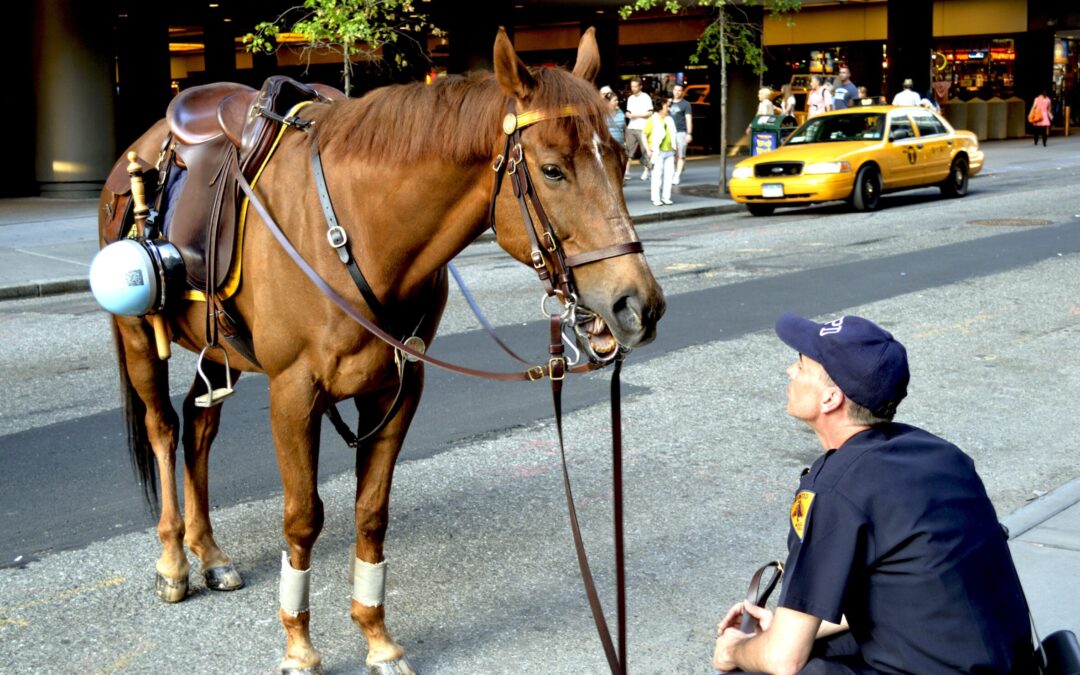
Central Park’s horse-drawn carriages are often presented as a picturesque remnant of an older New York. Events in June 2026 exposed a more troubling reality.
On 9 June, Deniz, a 16-year-old carriage horse, collapsed and died while pulling a carriage near East 90th Street. A necropsy publicised by the Transport Workers Union reportedly attributed his death to the ingestion of Japanese yew, a plant highly toxic to horses. The union denied that Deniz’s death resulted from neglect, while the Central Park Conservancy disputed the union’s account of responsibility.1
Eight days later, Romanch Mahajan, an 18-year-old tourist from India, died after suffering a head injury when he fell from a carriage that had bolted in Central Park. His family reported that he fell while trying to help his mother after she had been thrown from the carriage. According to the Associated Press, the driver had left the carriage to photograph its passengers, although drivers were not permitted to do so. At least two passengers were thrown from the carriage before it overturned after clipping another carriage.2 3
These incidents were different. The reported poisoning of Deniz does not, by itself, establish chronic mistreatment. Nor does a single driver’s conduct establish that every carriage driver acts irresponsibly. The events nevertheless demonstrate the fragility of a system in which horses, workers, passengers and other park users remain vulnerable to a toxic plant, a momentary lapse of control, an unexpected noise or an animal’s instinctive flight response.
The legal question is not simply whether one person can be blamed after something goes wrong. It is whether the activity itself continues to be justifiable.
For a UK animal law audience, the significance of the Central Park horses debate lies not only in New York’s legislative choices, but in the broader question it poses for animal protection law: when does a legal system reach the point at which further regulation can no longer justify the continued use of animals for human entertainment and/or monetary profit? The issue is therefore not confined to New York tourism. It is an example of the global recurring law reform problem of whether welfare standards should manage an existing practice or instead take steps to bring it to an orderly end.
A highly regulated industry is not necessarily a humane one
New York’s carriage-horse industry does not operate in a legal vacuum. Section 353 of the New York Agriculture and Markets Law makes it a criminal offence to overdrive, overload, torture, cruelly beat or unjustifiably injure an animal, or to deprive an animal of necessary food or drink.4
At city level, the Administrative Code imposes licensing and welfare requirements: carriage horses must have stalls of at least 60 square feet, be able to turn around and lie down, work no more than nine hours in a 24-hour period, receive rest breaks and water, undergo periodic veterinary examinations, and have at least five weeks’ annual furlough with daily access to paddock or pasture turnout.5 The Code also restricts work in extreme temperatures, limits the age at which horses may be licensed to between 5 and 26 years.6
On weekdays, the law largely confines daytime carriage operations to Central Park and its immediate surroundings. Between 10.00 am and 9.00 pm, carriages may not operate elsewhere in Manhattan, subject to the detailed statutory exceptions and routes.7
These provisions are material. Properly enforced, they may prevent some of the most obvious forms of overwork and physical neglect. Yet their detail can obscure their limitations.
First, most are minimum standards. A 60-square-foot stall is not a guarantee of a good living environment. Five weeks’ annual access to daily turnout does not provide year-round freedom of movement, grazing and social contact. A veterinary examination establishes an animal’s condition at a particular point. It does not guarantee that the animal will remain physically and psychologically well during the following four to eight months. In other words, it provides but a snapshot of the animal’s wellbeing.
Secondly, some protections are structured around enforcement after a threshold has already been crossed. Under the present extreme-weather provision, no violation occurs merely because the temperature exceeds the statutory limit. An authorised officer must first issue a written warning, and liability follows only if the operator then fails to comply.8
More fundamentally, the law assumes the legitimacy of carriage work. It asks how long a horse may work, how small the horse’s stall may be and how extreme the temperature may become. It does not ask whether horses should be used for this purpose at all.
Welfare means more than surviving a working day
Contemporary animal welfare science does not define good welfare merely as the absence of untreated disease, emaciation or collapse.
The Five Domains model considers nutrition, physical environment, health, behavioural interactions and the resulting mental state. Its treatment of behavioural interactions is particularly important. Animals’ welfare depends in part upon their ability to exercise agency by engaging voluntarily with their physical and social environment. The model identifies the frustration of grazing motivation and the prevention of social interaction with other horses as potential sources of negative affective experience.9
Research concerning 187 horses housed in individual boxes found associations between prolonged box housing and behavioural signs of compromised welfare. The authors considered regular free exercise, interaction with other horses and access to fibre necessary to meet horses’ behavioural and physiological needs.10
That study concerned restrictively housed sport horses, not New York’s carriage horses, and should not be presented as direct evidence about every Central Park stable. It nevertheless illustrates why compliance with minimum stall dimensions cannot, without more, establish positive welfare.
The specific scientific literature on carriage horses also requires careful treatment. A 2015 study of ten tourism carriage horses found that the physical work examined involved submaximal effort and that measured physiological variables suggested adaptation to the work. The authors, however, stressed that those variables were insufficient to diagnose welfare problems and called for a holistic assessment incorporating management practices and other animal-based indicators.11
A 2024 study involving 22 carriage horses in Sicily similarly suggested adaptation to the work examined. It also found higher values for several stress-related measures during July, advocated avoiding the hottest hours of summer days and expressly cautioned that its sample was small.12
A principled case for reform should therefore avoid the unsustainable claim that every carriage journey necessarily causes measurable acute suffering. The absence of acute physiological disturbance in a small group of horses, under particular conditions, is not equivalent to evidence of a good life. It says little about agency, year-round housing, cumulative exposure to hard surfaces and noise, fear responses, social opportunities or the consequences of low-frequency but serious incidents.
The case for ending the industry rests, in part, upon the combined weight of those considerations. Horses are being exposed to foreseeable restrictions and risks for a use whose principal purpose is tourism and entertainment.
New York’s two competing models of reform
New York has debated ending the carriage trade for many years. Introduction 0967-2024 would have prohibited horse-drawn carriage operations from 1 June 2026, required the humane disposition of carriage horses and created a workforce-development programme. The Council’s Committee on Health defeated that bill on 14 November 2025, and it was filed at the end of the legislative session on 31 December 2025.13
Before that defeat, then Mayor Eric Adams issued Executive Order 56 in September 2025. The Order directed city agencies to support Introduction 0967 or similar legislation, identify alternative employment opportunities, create a process for the voluntary return of licences and explore replacement tourism programmes, including electric carriages. It also directed agencies to strengthen inspections and enforcement while the industry continued to operate.14
A new proposal, Introduction 0943-2026, was introduced on 11 June 2026. Originally known as ‘Ryder’s Law’, the bill was renamed ‘Romanch’s Law’ after Mahajan’s death. The Committee on Health held a public hearing on 15 July 2026. No committee vote was recorded and, as of 16 July 2026, the bill remained in committee. The Council’s legislative record listed 26 sponsors.15
The bill would prevent the issue of new horse-drawn cab and driver licences once the relevant provisions took effect. Existing licences could be renewed only for a limited period and would expire no later than 1 June 2028. The operative carriage provisions would then be repealed, bringing the industry to an end.16
The bill would also regulate the disposition of horses leaving the industry. An owner would have to provide at least five days’ notice of a proposed transfer, together with the prospective recipient’s contact details. Horses could not be transferred for slaughter, resale for slaughter, transport or holding for slaughter, use in another horse-drawn cab business or another ‘inhumane purpose’. Owners would be required to certify compliance, while the responsible department would provide information about people and organisations able to receive the horses.17
A workforce-development programme would be established for drivers and other workers. The programme would begin 90 days after enactment and remain in operation until 1 June 2030.18
What the 15 July hearing changed
The hearing strengthened the bill’s political prospects, although not its legal status. Council Speaker Julie Menin publicly endorsed Romanch’s Law, becoming the first sitting Speaker to support legislation ending horse-drawn carriage rides in Central Park. Romanch’s father and aunt urged the Council to prevent another family suffering the same loss. Carriage drivers and TWU Local 100 opposed abolition and argued that the bill’s workforce provisions were too uncertain to protect their livelihoods and businesses. Speaker Menin acknowledged that worker protection and the position of medallion owners would have to be negotiated. The competing testimony reinforces the need to distinguish between the merits of ending the use of horses and the City’s separate duty to deliver a genuine just transition for workers.19
There is also a competing proposal. Introduction 0937-2026 would retain the industry while modifying its regulation. It proposes a decennial study of carriage-horse conditions, changes to the source of official temperature and humidity data, annual surveys and installation of hitching posts, practical examinations for drivers and probationary licences. It would also permit weekday carriage operations in Manhattan starting at 7.00 am, three hours earlier than is presently allowed.20
Some of those measures may reduce particular risks. Practical assessment of drivers is preferable to inadequate assessment, and sufficient water, shade and secure hitching infrastructure are essential while horses remain at work. There are nevertheless serious limitations to this approach. A study whose recommendations may take two years to emerge postpones rather than resolves the central issue. Replacing street-level measurements at a carriage stand with data from a single National Weather Service location may create consistency, but it also warrants scrutiny as to whether it will reflect the conditions where individual horses are waiting and working. Extending operating hours would entrench, rather than progressively reduce, the use of horses.
The two bills ultimately represent different legal philosophies. Introduction 0937 asks how the trade can be managed. Introduction 0943 asks whether it should continue.
Parallel legislation remains pending at the state level. Assembly Bill A1888 and Senate Bill S5822 would prohibit horse-drawn cabs in New York City and regulate the humane sale or disposition of affected horses. As of 16 July 2026, A1888 remained in the Assembly Cities Committee and S5822 remained in the Senate Cities 1 Committee.21
Mayor Zohran Mamdani has said that the horse-carriage industry should end, but on 14 July he supported only the “spirit” of Introduction 0943 and criticised its worker protections as insufficient. He has called for any phase-out to be developed with labour and community partners and to provide credible employment, training and development opportunities.22
Why phase-out is the better legal and ethical course
The conventional regulatory model treats a carriage horse as a productive animal whose commercial use remains legitimate provided prescribed welfare thresholds are observed. A rights-oriented approach begins elsewhere. It asks what interests are at stake, how seriously each interest is affected and whether one party’s interests justify imposing the burden upon another.
The horses have significant interests in bodily integrity, freedom from pain and fear, social contact, movement, rest and some control over their environment. The passengers’ interest is primarily in recreation, novelty and the experience of a perceived tradition. Those interests are not remotely equivalent.
This does not mean that the interests of carriage drivers can be dismissed. Employment, income, identity and community are substantial human interests. Many drivers may care deeply for the horses with whom they work. An argument for abolition need not portray individual workers as cruel or indifferent.
The proper conclusion is that workers should not be required to bear the financial cost of an animal-protection reform from which the wider public benefits. Their livelihoods should be protected through transition funding, compensation, training and secure alternative employment. They should not be protected by requiring horses to remain in commercial service.
Nor does tradition provide an independent justification. A practice does not become humane merely because it is old or visually familiar. New York can preserve the history and appearance of carriage tourism through walking tours, accessible guided transport or appropriately regulated electric heritage carriages. What matters is the experience created for visitors, not the continued use of a sentient animal as its engine.
Animal protection law frequently develops by recognising that regulation cannot make every use acceptable. The relevant point is not that each individual journey amounts to criminal cruelty. It is that the risks and restrictions imposed upon horses are disproportionate to the recreational purpose for which they are imposed.
This conclusion is not novel within the legal profession. The New York City Bar Association’s Animal Law Committee has previously supported phasing out horse-drawn carriages, taking the view that regulation had not ‘eliminated the dangers inherent’ in requiring horses to work in Manhattan, which it considered was ‘an inhospitable and dangerous environment’ for the animals.23
Romanch’s Law should be strengthened
Introduction 0943 represents the preferable model, but its present text should not be treated as the final word. The 15 July hearing strengthened the case for phase-out while confirming that the bill’s transition and retirement safeguards require amendment before passage.
The introduction of replacement horses should end
The bill would allow an existing licence holder to substitute or replace a horse who becomes lame, ill, unsuitable for work or retired, thereby maintaining the licence holder’s existing number of carriage-horse licences during the transition.24
That provision is difficult to reconcile with a genuine phase-out. It may permit a new horse to enter the trade shortly before operations end. A better approach would freeze the existing carriage-horse population immediately, while allowing licence holders to retire horses without losing access to worker-transition support. No horse should be introduced into a business that the law has already determined must close.
‘Humane disposition’ requires independent oversight
The bill’s prohibition on slaughter and transfer to another carriage business is essential. Its proposed system nevertheless relies substantially upon advance notice, information about the proposed recipient and an owner’s certification.
A stronger regime would require an individual retirement plan for every horse. This should include an independent veterinary and behavioural assessment, identification of an approved sanctuary, adopter or retirement facility, and verification of the suitability of that placement. Horses should remain identifiable through microchips or equivalent permanent records. A public register should record each horse’s transfer and general status, subject to proportionate safeguards for private information.
The prohibition on slaughter should remain enforceable after the initial transfer. The City should retain powers to inspect placements, require further information and intervene where a horse has been re-transferred or is no longer receiving appropriate care. Funding must accompany these duties. Outreach alone cannot guarantee that suitable lifelong placements will be available.
The workforce programme must be funded and enforceable
The bill requires a workforce-development programme but does not itself specify compensation levels, retraining entitlements, wage protection, licence buy-backs or guaranteed routes into alternative work.25
Those details should not be left entirely to administrative discretion. The legislation should require meaningful consultation with workers and their union, paid retraining, temporary income protection and compensation for surrendered licences and relevant assets. Drivers should receive priority access to suitable roles in tourism, transport, parks services and any replacement heritage-carriage programme.
A just transition is not an optional concession. It is what prevents the legitimate interests of workers from being invoked to perpetuate the exploitation of animals.
Horses require stronger protection during the transition
A phase-out date of 1 June 2028 leaves a substantial period during which the present risks will remain. The Council should consider whether the date can responsibly be brought forward. At a minimum, the intervening period should be subject to stronger inspection and transparency requirements.
Veterinary findings, working hours, weather-related suspensions, accidents, removals from work and enforcement action should be published in a readily accessible form. Independent welfare assessments should include behavioural as well as physical indicators. The rule under which an excessive-temperature violation arises only after a written warning and subsequent non-compliance should be reconsidered. Once a statutory safety threshold has been reached, the obligation to stop work should be immediate.
Preserving the park, not the exploitation
The debate over Central Park’s carriage horses is sometimes presented as a conflict between people who value tradition and people who care about animals. That framing is too narrow.
The relevant choice is between preserving the outward appearance of a tradition and retaining the exploitation on which it currently depends. New York can preserve its history, support its workers and provide memorable experiences for visitors without compelling horses to negotiate the noise, confinement and hazards of a modern city.
Introduction 0943 should be enacted, but amended to prevent the introduction of replacement horses, secure independently supervised lifetime retirement arrangements, provide a properly funded transition for workers and strengthen welfare enforcement until the final carriage has ceased operating. The Committee should now advance an amended bill without allowing negotiations over worker protection to become a pretext for indefinite delay.
The law should no longer concern itself only with how exploitation is managed. It should recognise when that exploitation has ceased to be defensible. The immediate task for the Committee is therefore not to choose between animal welfare and worker justice. It is to legislate for both.
About the authors:

Acland Bryant has a broad administrative & public law practice at Garden Court Chambers, specialising in cases that involve issues of environmental law & climate justice, and animal welfare. He is involved in several innovative challenges and appeals that materially shape how the law is applied for the protection of animal welfare, and acts for animal activists, NGOs and local action groups in a wide range of animal welfare-related issues. Alongside his practice at Garden Court, Acland is doctoral candidate, undertaking research in climate litigation, and is an Associate Tutor at the University of East Anglia. Acland was Highly Commended for Young Pro Bono Barrister of the Year at the Bar Pro Bono Awards 2025 and shortlisted for the same award in 2026. Acland is shortlisted for Planning and Land Use Junior of the year at the 2026 Legal 500 Bar Awards.

Mikhail Popov specialises in a wide variety of complex high value clinical negligence claims, including birth injuries, wrongful births, surgical claims, delays in diagnosis of cancer, and fatal claims. He co-founded Fieldfisher’s working group for The Chancery Lane Project (an initiative that upskills lawyers in climate-aligned contractual drafting to assist our clients in their net zero transitions), as well as the Legal Vegan Network (a platform for informed discussion on the ethical, environmental and health benefits of a vegan lifestyle whilst also fostering a supportive community of like-minded lawyers and professionals).
In his spare time he enjoys rock climbing, backpacking the world, and cooking up plant-based storms in the kitchen.
Footnotes:
- Aaron Katersky and Ivan Pereira, ‘Central Park Carriage Horse’s Cause of Death Revealed’ (ABC News, 16 June 2026) <https://abcnews.com/US/central-park-carriage-horses-sudden-death-cause-revealed/story?id=133921615> accessed 13 July 2026. ↩︎
- Jake Offenhartz, ‘Teenager Dies after Being Thrown from Horse-Drawn Carriage in NYC’s Central Park’ (AP News, 17 June 2026) <https://apnews.com/article/central-park-horse-carriage-injury-fb31eec155066042d13b2b5dd1ce7f3a> accessed 13 July 2026. ↩︎
- New York City Council, Committee on Health, Committee Report of the Legislative Division on Int No 943-2026 (15 July 2026) 6 <https://legistar.council.nyc.gov/View.ashx?GUID=EADC59FE-1BC4-466A-B577-B964EE317032&ID=15691102&M=F> accessed 16 July 2026 ↩︎
- New York Agriculture and Markets Law § 353. ↩︎
- New York City Administrative Code §§ 17-330(c) and 17-330(g)(1)–(2). ↩︎
- New York City Administrative Code §§ 17-330(n), 17-330(o)(1)–(2) and 17-330(q). ↩︎
- New York City Administrative Code § 20-381.1(a)–(b), especially § 20-381.1(b)(1). ↩︎
- New York City Administrative Code § 17-330(o)(3)–(5). ↩︎
- DJ Mellor and others, ‘The 2020 Five Domains Model: Including Human–Animal Interactions in Assessments of Animal Welfare’ (2020) 10 Animals 1870, secs 5–5.2, especially secs 5.1–5.2. ↩︎
- A Ruet and others, ‘Housing Horses in Individual Boxes Is a Challenge with Regard to Welfare’ (2019) 9 Animals 621, secs 4–5 ↩︎
- F Vergara and TA Tadich, ‘Effect of the Work Performed by Tourism Carriage Horses on Physiological and Blood Parameters’ (2015) 35 Journal of Equine Veterinary Science 213, 213–15. ↩︎
- F Arfuso and others, ‘Welfare and Stress Assessment of Tourism Carriage Horses under Real Working Conditions in Sicily’ (2024) 139 Journal of Equine Veterinary Science 105136, abstract and conclusion. ↩︎
- New York City Council, Int No 0967-2024, legislative summary and history (Committee on Health vote, 14 November 2025; filed, 31 December 2025). ↩︎
- Executive Order No 56, ‘Preparing for the Cessation of Horse-Drawn Carriages in New York City’ (City of New York, 17 September 2025) §§ 1–3. ↩︎
- New York City Council, Int No 0943-2026, legislative details, sponsors and status <https://legistar.council.nyc.gov/LegislationDetail.aspx?GUID=53C552B4-4BC2-41DA-A14A-560E74E7F3E1&ID=8067835&Options=ID%7CText%7C&Search=marte> accessed 16 July 2026; New York City Council, Committee on Health, meeting details, 15 July 2026 <https://legistar.council.nyc.gov/MeetingDetail.aspx?GUID=E7D597B7-AFD7-4AB0-B21F-8E4F254CA003&ID=1425278&Options=info%7C&Search=> accessed 16 July 2026; New York City Council, Committee on Health, Committee Report of the Legislative Division on Int No 943-2026 (15 July 2026) 5, 18–19 <https://legistar.council.nyc.gov/View.ashx?GUID=EADC59FE-1BC4-466A-B577-B964EE317032&ID=15691102&M=F> accessed 16 July 2026. ↩︎
- New York City Council, Int No 0943-2026, §§ 13, 18–19 and 22. ↩︎
- New York City Council, Int No 0943-2026, § 3, proposed New York City Administrative Code § 17-329(a)–(c). ↩︎
- New York City Council, Int No 0943-2026, §§ 21–22, proposed New York City Administrative Code § 20-374.2. ↩︎
- New York City Council, ‘Speaker Julie Menin Announces Support for Romanch’s Law to End Horse-Drawn Carriages in Central Park’ (14 July 2026) <https://council.nyc.gov/press/2026/07/14/3175/> accessed 16 July 2026; Samantha Liebman, ‘City Council Committee Holds Hearing on Horse Carriage Ban Bill’ (NY1, 15 July 2026) <https://ny1.com/nyc/all-boroughs/news/2026/07/15/city-council-holding-hearing-on-horse-carriage-ban-bill> accessed 16 July 2026 ↩︎
- New York City Council, Int No 0937-2026, legislative summary and §§ 1–8 (introduced 11 June 2026), especially § 2, proposed New York City Administrative Code § 17-331.1, and § 7. ↩︎
- New York Assembly Bill A1888 (2025–26), legislative status (referred to Assembly Cities Committee, 7 January 2026) <https://www.nysenate.gov/legislation/bills/2025/A1888> accessed 16 July 2026; New York Senate Bill S5822 (2025–26), legislative status (referred to Senate Cities 1 Committee, 7 January 2026) <https://www.nysenate.gov/legislation/bills/2025/S5822> accessed 16 July 2026. ↩︎
- NYC Mayor’s Office, ‘Transcript: Mayor Mamdani Cuts Ribbon on Affordable Co-Ops at ANCP Morningside’ (10 June 2026), responses concerning horse-drawn carriages <https://www.nyc.gov/mayors-office/news/2026/06/transcript–mayor-mamdani-cuts-ribbon-on-affordable-co-ops-at-an> accessed 16 July 2026; NYC Mayor’s Office, ‘Transcript: Mayor Mamdani and Chancellor Kamar Samuels Launch Major Expansion of Pre-K Special Education’ (14 July 2026), response concerning horse-carriage legislation <https://www.nyc.gov/mayors-office/news/2026/07/transcript–mayor-mamdani-and-chancellor-kamar-samuels-launch-ma> accessed 16 July 2026. ↩︎
- New York City Bar, ‘Report on Horse Drawn Carriage Legislation’ (23 March 2023) <https://www.nycbar.org/reports/report-on-horse-drawn-carriage-legislation/>; accessed 16 July 2026. ↩︎
- New York City Council, Int No 0943-2026, § 2, proposed New York City Administrative Code § 17-327(e)(2). ↩︎
- New York City Council, Int No 0943-2026, § 21, proposed New York City Administrative Code § 20-374.2. ↩︎