


By Divya Selvaraj
The Zoo Licensing Act (1981) defines zookeeping as the keeping of an animal “when it is elsewhere in the personal possession of the operator of the zoo, or of competent persons acting on his behalf”.1 Read together with the Zoo Licensing Act 1981: Guide to the Act’s Provisions (2012), the Zoo Licensing Act (1981) sets out the minimum standards that zoos in England, Wales and Scotland are expected to meet on animal welfare, public safety, conservation and education.
Other key legislation that govern the exhibition of wild animals include the Animal Welfare Act 2006 in England and Wales and the Animal Health and Welfare (Scotland) Act 2006 in Scotland, which state that animal keepers have a legal duty of care to provide for the ‘Five Needs’ – namely, the need for a suitable environment, the need for a suitable diet, the need to be able to exhibit normal behaviour patterns, any need to be housed with, or apart from, other animals and the need to be protected from pain, suffering, injury, and disease.2
The UK government recently published updated standards of modern zoo practice (the “Standards“) based on the Five Needs on 24 May 2025. 3 The Standards will come into effect on 24 May 2027.
Some of the key requirements under the Standards include:
- Elephant Care: Elephant holding institutions must produce long-term management plans as well as an individual welfare plan for each elephant.4 Larger habitat enclosures for elephants are now mandatory.5
- Bird Welfare: The tethering of birds of prey for a cumulative period greater than four hours in any 24-hour period will be phased out6 and larger aviary enclosures for birds of prey will be required.7
- Marine Animal Interactions: Fish, decapod crustaceans and cephalopods will not be allowed to be kept in touch pools.8
- Wild Animal Sourcing: The acquisition of animals from the wild will be prohibited unless there is a justifiable reason for doing so.9
- Improved conservation: The Standards require zoos to participate in clear conservation measures10 and new requirements for records detailing how such conservation measures were met.11
- Protecting the public: All zoos will need to ensure that appropriate safety measures are in place which could include double-gated entry systems, lone worker procedures, and the appropriate availability of firearms.12
While the Standards have been described as “long-overdue” reforms and a “huge step forward”13 they have also been described as “non-transformative”, 14 with several concerns around the justification of zoos:
- The Standards require that touch pool environments “must be suitable to meet the welfare needs of the animals at all times and allow them the choice to interact with the public or to stay out of public reach”.15 It is unclear how this can be ensured, given that the concept of a touch pool appears to be at odds with the notion that “a modern, good zoo [would] put wildlife first” as opposed to being a “place of entertainment”. 16
- Although the larger habitats for elephants are intended “to better replicate the large territories elephants naturally inhabit”,17 it is questionable whether the requirements under the Standards are sufficient, with some calling for the complete phasing-out of elephants from zoos by ceasing importation and breeding programmes.18 The RSPCA’s views are that “the supposed benefits of conservation, education and research do not outweigh the costs to these animals, which too frequently live shortened lives in unsuitable conditions, and are often subjected to inhumane treatment by handlers.”19 Additionally, although the Standards come into effect in 2027, zoos are required to implement the minimum requirements for elephant exclosures only by 1 January 2040, 20 which organisations such as Born Free fear “will mean more than a decade of unnecessary captive suffering and exploitation.” There is also concern that the stress and associated aspects of captivity increases the susceptibility of elephants to viruses such as elephant endotheliotropic herpesviruses. Since 2009, twelve elephants have died at Chester Zoo, eight of whom were under the age of five. 21
- Born Free had reportedly advocated to Defra for a Zoo Insurance Bond (similar to ATOL protection established by the travel sector that covers consumers where a travel company or airline goes out of business) for access to sufficient funds to care of animals for up to three years in the case that a zoo is forced to close down. The Standards will require zoos to have to have a contingency plan for income disruptions of greater than 6 months or forced closure but this falls short of a bond.22
- With around 300 zoos in the UK alone23 some have argued for stricter licensing requirements. According to a 2019 report by Born Free, the Consortium of Charitable Zoos, whose members operate some of the largest zoos in the UK (13 zoos in total), had access to only 2.7 months of financial reserves in the case of income disruption, and spent only 4.2% of their total income on in situ (natural) conservation, choosing to spend more on new exhibits instead.24 The lessons from the pandemic on financial reserves and on the stress of lockdown may be turning hazy to some but the reality of the modern zoo being primarily a place of entertainment than a method of conservation appears to be far less hazy.
About the author: Divya Selvaraj
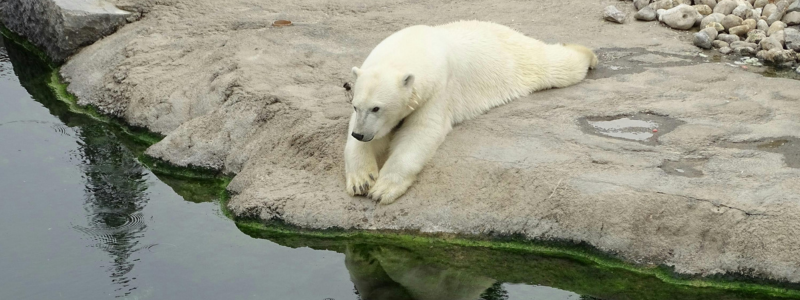
I am a triple-qualified solicitor with a keen interest in animal law and advocacy. Having volunteered at a zoo as a school student, I was a fan of zoos until I watched a polar bear on Prozac at the Central Park Zoo swim obsessively in a pool that could have only been a bathtub to him.

- Section 22(2), Zoo Licensing Act 1981. ↩︎
- Section 9(2), Animal Welfare Act 2006 and Section 24(3), Animal Health and Welfare (Scotland) Act 2006. ↩︎
- Standards of Modern Zoo Practice for Great Britain: https://assets.publishing.service.gov.uk/media/681494272de62f4a103a828d/standards-of-zoo-practice-2025.pdf ↩︎
- A8.1, Standards of Modern Zoo Practice for Great Britain. ↩︎
- A8.14, Standards of Modern Zoo Practice for Great Britain. ↩︎
- A6.11, Standards of Modern Zoo Practice for Great Britain. ↩︎
- A6.2, Standards of Modern Zoo Practice for Great Britain. ↩︎
- A9.22, Standards of Modern Zoo Practice for Great Britain. ↩︎
- A7.19, Standards of Modern Zoo Practice for Great Britain. ↩︎
- 10.1, Standards of Modern Zoo Practice for Great Britain. ↩︎
- 10.3, Standards of Modern Zoo Practice for Great Britain. ↩︎
- Section 8, Standards of Modern Zoo Practice for Great Britain. ↩︎
- Animal welfare rules in British zoos set for major overhaul: https://www.gov.uk/government/news/animal-welfare-rules-in-british-zoos-set-for-major-overhaul ↩︎
- Born Free laments missed opportunity of new zoo standards: https://www.bornfree.org.uk/news/born-free-laments-missed-opportunity-of-new-zoo-standards/ ↩︎
- A9.23, Standards of Modern Zoo Practice for Great Britain. ↩︎
- Animal welfare rules in British zoos set for major overhaul: https://www.gov.uk/government/news/animal-welfare-rules-in-british-zoos-set-for-major-overhaul ↩︎
- Animal welfare rules in British zoos set for major overhaul: https://www.gov.uk/government/news/animal-welfare-rules-in-british-zoos-set-for-major-overhaul ↩︎
- Overhaul of zoo animal welfare rules welcomed by RSPCA: https://www.rspca.org.uk/-/overhaul-of-zoo-animal-welfare-rules-welcomed-by-rspca ↩︎
- Live hard, die young – how elephants suffer in zoos: https://tinyurl.com/5auvm6bz ↩︎
- A8.14, Standards of Modern Zoo Practice for Great Britain. ↩︎
- https://www.bornfree.org.uk/news/second-elephant-dies-at-chester-zoo-in-a-month/ ↩︎
- Born Free laments missed opportunity of new zoo standards: https://www.bornfree.org.uk/news/born-free-laments-missed-opportunity-of-new-zoo-standards/ ↩︎
- https://www.bornfree.org.uk/resource/zoos-financing-conservation-or-funding-captivity/ ↩︎
- https://www.bornfree.org.uk/resource/zoos-financing-conservation-or-funding-captivity/ ↩︎