




By Marianthi Baklava
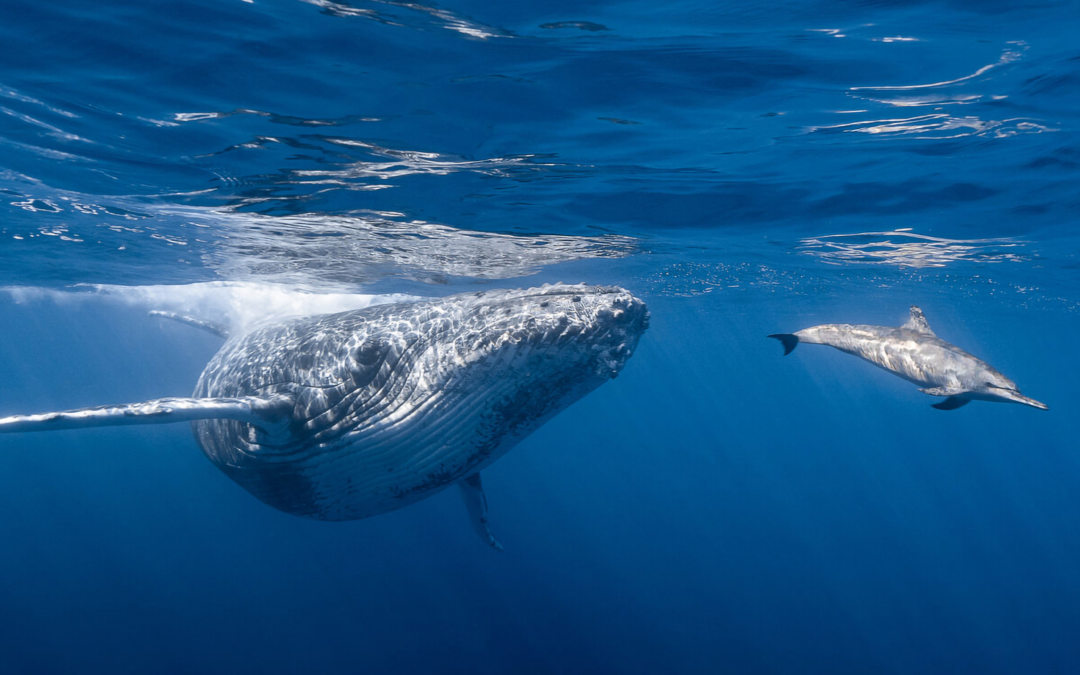
Following He Whakaputanga Moana (the landmark Declaration for the Ocean signed by Polynesian Indigenous leaders in March 2024), momentum continues to build for recognising whales as legal persons. The initiative forms part of wider conservation efforts in the South Pacific led by the team behind the Moananui Sanctuary and the Pacific Whale Fund, for whom this project represents a continuation of their commitment to embedding Indigenous knowledge and ecological science into enforceable frameworks. Simmons & Simmons and Ocean Vision Legal have acted as pro bono legal counsel in support of this work, assisting with the drafting of legislation to give effect to those objectives.
In a previous blog, we explored the cultural and legal foundations of the declaration and its significance for marine personhood (read here). Now, Te Mana o Te Tohorā (‘The Enduring Power of Whales’) takes that vision a step further. Announced on 20 November 2024 by Simmons & Simmons, Ocean Vision Legal, and the Pacific Whale Fund, the draft legislation seeks to enshrine in statutory form the principles first articulated in He Whakaputanga Moana. It proposes a legal framework recognising whales and other cetaceans as sentient beings with enforceable rights to life, movement, and bodily integrity.
The initiative, as noted in the Simmons & Simmons press release, has been spearheaded by the royal houses of Polynesia, who have long led efforts to protect whales as taonga (treasures) and secure their ocean home. The bill is intended to support and operationalise those efforts within formal legal systems and is currently under consideration by several South Pacific States.
Robert Allen, a partner at Simmons & Simmons, stated that the bill, which the firm co-drafted, challenges “outdated legal frameworks that view these beings as mere resources” and instead recognises their “sentience, complex social structures, and vital ecological roles.”
The bill is intended as a statutory model or blueprint for international adoption. It marks a legislative turning point in the global rights of nature movement, building directly on the values and commitments made earlier this year in the Declaration for the Ocean.
Whales, London’s Legacy, and Global Precedents
That this initiative emerged in London is notable, given the city’s historical role in the commercial whaling trade. In the 18th and 19th centuries, whale oil illuminated London’s streets and powered its industries, while baleen from whales was widely used in corsets, umbrellas, and brushes.
Supporters argue that legal personhood provides more robust and enforceable protections than welfare or conservation-based approaches. Whereas conservation statutes often prioritise species survival or biodiversity metrics and can be overridden by policy exception, legal personhood recognises individual animals as bearers of rights.
This creates standing for guardians to bring direct claims, anchoring enforcement in legal obligations rather than discretionary state action. By contrast, the welfarist model may permit inhumane or ecologically harmful practices so long as they fall within permissible limits.
Critics, however, warn that personhood may overburden courts with guardianship disputes or entrench cultural relativism in legal reasoning. Others suggest it could be exploited to block renewable energy projects like offshore wind farms or generate jurisdictional uncertainty in areas where national, Indigenous, and international legal systems overlap.
Legal Precedent
The treaty He Whakaputanga Moana (‘Declaration for the Ocean’), signed on 28 March 2024 by Polynesian Indigenous leaders recognising whales as legal persons with inherent rights, inspired Te Mana o Te Tohorā. In the words of the late Māori King Tūheitia Pōtatau Te Wherowhero VII, the declaration was not ‘merely words on paper’ but a symbolic and legal protection for whales as taonga (treasures), envisioning an ocean where ‘our mokopuna (descendants) deserve to inherit… the songs of whales.’
The draft bill draws upon global precedents recognising non-human personhood, in which legal persons are represented by guardians capable of initiating legal actions to defend their rights:
Ecuador: The 2008 Constitution was the first in the world to grant enforceable legal rights to nature, allowing ecosystems to be recognised as rights-bearing entities.
Bolivia, p. 117: The 2010 Law on the Rights Mother Earth, upgraded in 2012 to the Framework Law of Mother Earth and Integral Development for Living Well (the 2012 framework being superior to other laws), recognised nature (‘Pachamama’) as a legal person, with rights to life, regeneration, biodiversity, water, and restoration. The legal framework reflects Aymara cultural principles, including gender complementarity and the ethical primacy of collectivities over individualism.
New Zealand: In 2014, Te Urewera forest, formerly a national park, was recognised as a legal person under the Te Urewera Act. In 2017, the Te Awa Tupua (Whanganui River Claims Settlement) Act conferred legal personhood on the Whanganui River, embedding Māori cosmologies and co-governance into statutory law.
Colombia, p. 533: In 2016, the Constitutional Court recognised the Atrato River as a legal subject, citing its environmental significance and the cultural values of Indigenous communities.
India: In Mohd. Salim v State of Uttarakhand (2017), the High Court granted legal personhood to the Ganges and Yamuna rivers, as well as dolphins, to ensure their protection under the law.
Treaty vs Statute – Pros and Cons:
Treaties, especially when led by Indigenous or international actors, offer symbolic power and cross-border moral force, aligning with global movements like the UN Harmony with Nature initiative. However, they may lack enforceability in domestic courts without legislative implementation. Statutes, by contrast, provide direct legal authority and justiciability, enabling more immediate regulatory and judicial consequences—but may be limited to specific jurisdictions and harder to achieve in pluralist or contested political environments.
Scientific Foundations and Legal personhood
Building on widely accepted research into the sentience of whales, recent research in cetacean science, published in February 2025, adds compelling support for the legal recognition of whales as persons, grounded in observable linguistic and cognitive complexity:
– Zipf’s Law: Whale vocalisations follow Zipf’s Law, where ‘more frequently used elements (e.g., notes, phonemes, and words) will be shorter in duration,’ indicating a principle of highly linguistically organised communicative efficiency found in human language. In whales, this is reflected in the brevity of common codas and syllables, shaped by social and ecological demands.
– Menzerath’s Law: This linguistic principle predicts that ‘longer sequences (e.g., songs, words) will be composed of shorter elements (e.g., notes, phonemes). In other words, when production costs increase in one domain (e.g., sequence length) they decrease in another (e.g., element duration).’ In whales, longer sequences such as songs or social calls are composed of more concise units, showing efficient structuring of acoustic communication.
Project CETI (Cetacean Translation Initiative) has added further weight to this view. Using artificial intelligence and robotics, CETI researchers are mapping correlations between sperm whale codas and their social behaviours, pursuing insights into the “duality of patterning” (meaningful units from meaningless sounds).
Legally, these findings raise the evidentiary threshold for recognising whales as rightsholders. The case rests not solely on moral arguments or sentience, but on scientifically verifiable traits such as culture, communication, and social organisation. Such traits align with criteria already used in legal personhood doctrines. However, sceptics may argue that applying these criteria to non-humans risks stretching legal personhood beyond manageable limits, undermining the concept’s coherence and leading to unpredictable obligations for human and institutional actors. The interpretation of traits like “culture” or “social organisation” remains contested even among anthropologists, suggesting caution before anchoring legal status in such evolving metrics.
A Legal Framework for the Anthropocene: Commercial and Policy Implications
Economically, whales are increasingly valued for their ecological services. Dr. Ralph Chami, an Assistant Director at the International Monetary Fund, estimates that a single whale contributes over $2 million over its lifetime in services such as carbon capture and nutrient cycling. His contribution to the Moananui Sanctuary (see Moananui Blueprint, p.7) reflects the same ethos that underpins He Whakaputanga Moana: a commitment to embedding Indigenous values and scientific evidence within enforceable legal frameworks. By working alongside Pacific leaders in Moananui, Chami exemplifies how economic valuation can be mobilised in support of a broader rights-of-nature movement led from within Polynesia.
The Chartered Institution of Water and Environmental Management further reports: ‘Whales accumulate carbon in their bodies during their long lives’ and every single great whale removes 33 tonnes of CO2 on average, while in comparison a tree absorbs merely up to 48 lbs of CO2 a year. Per their analysis, whales contribute nearly US$1 trillion in services to fight climate change.
Proponents argue that legal personhood would align environmental governance with ecological science, compelling industries such as shipping, offshore wind development, and naval operations to internalise the true environmental costs of their activities. Opponents, however, believe that granting whales procedural rights in regulatory decision-making could create operational uncertainty, delay critical infrastructure projects, and trigger cross-jurisdictional legal conflicts.
Outlook: Enforcement, Implementation, and Prospects
Te Mana o Te Tohorā’s future impact will depend on its adoption, implementation, and enforcement. These are three persistent challenges in marine governance. Since Te Mana o Te Tohorā was announced, the draft has reportedly been under informal review by several Pacific Island states and civil society networks exploring legislative uptake.
Even if adopted, enforceability may remain a challenge. International ocean law has historically struggled with enforceability, especially in areas beyond national jurisdiction. Treaties often falter at the enforcement stage due to evidentiary barriers, resourcing gaps, and fragmented authority.
Nonetheless, the global momentum behind marine mammal protection is growing. The High Seas Treaty (2023), aimed at protecting biodiversity beyond national jurisdictions, and the 2022 Global Ocean Alliance, both reflect a growing legal consensus around ocean stewardship.
While adoption in domestic legislation remains a future goal, its symbolic and strategic value lies in normalising the language of rights in marine law and in demonstrating the feasibility of integrating customary guardianship models into formal legal systems. Ultimately, the initiative is aligned with recent examples of law’s evolving capacity to meet planetary challenges. It offers a pluralistic, dialogic jurisprudence that listens to Indigenous knowledge systems, engages ecological science, and reimagines law as a tool not just for governing people, but for safeguarding the living world they inhabit.
About the author:

Marianthi is a future trainee solicitor based in West London, currently completing her SQE1&2 LLM at the University of Law (Moorgate). Alongside her studies, she researches animal law, environmental protection, and sports litigation and regulation, and she is driven by the challenge of applying the law to complex and emerging issues in these fields. Marianthi is interested in writing for A-law to help advance legal reforms that protect animals, with a particular interest in wildlife conservation and safeguarding natural ecosystems.