



By Randi Milgram and Lior Harris
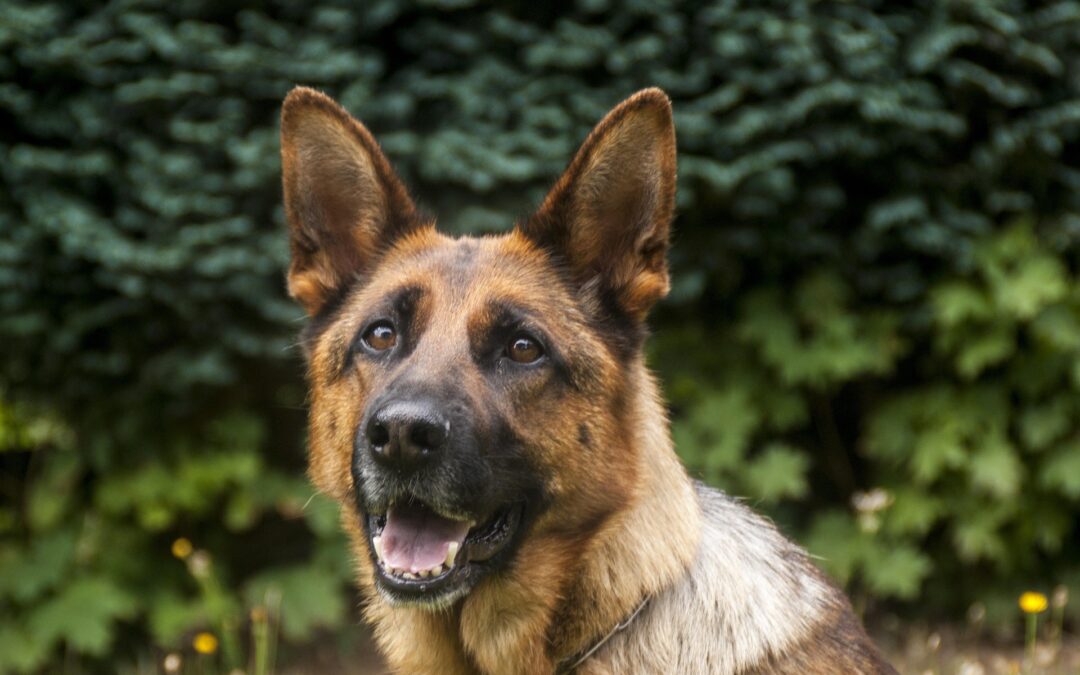
Animals are routinely used in support of national security across the world. Dogs scout for criminal activity at airports, they help local police departments track and search. And for centuries, dogs have served in the military. Whilst we support finding alternatives to such use of animals who are unable to consent, so long as animals are being so used, we hope to see states fulfill their moral obligation to ensure the wellbeing of these animals once their service ends. Few countries take this obligation seriously, but the list is now increasing, thanks to recent good news out of Israel.
This article shares some of the ways dogs working in national security are protected in law across the world, followed by a more detailed introduction to the new legislation in Israel, written by a lawyer directly involved in the passage of the new law.
In most nations, service animals are forgotten once their service is complete; in fact, it was once very common to abandon or euthanise the animal once he was no longer of use.[1],[2] Nearly all of the approximately 5000 canine soldiers from the United States used in the Vietnam War were euthanised or abandoned in Vietnam,[3] even when human handlers, after forging such strong bonds with the dogs, begged the military higher-ups to allow them to pay for the dogs’ return themselves.[4] Over time, these consistently strong connections between human and canine led many governments to allow for adoption at the end of service, and now more than 90% of military dogs are adopted by their handlers in some countries.[5]
The North American Context
In the United States, treatment of military working dogs (MWDs) has improved since the dark days of the Vietnam War, where dogs were classified as surplus equipment, which meant that they were legally allowed to be abandoned or euthanised when they no longer were fit for purpose.[6] In 2000, Robby’s Law allowed handlers to adopt their retiring dogs, after decades of handlers expressing their desire to do so. In 2013, MWDs were reclassified as ‘canine members of the armed forces’ rather than equipment, requiring the military to fly retiring dogs back to the USA for adoption rather than being permitted to abandon them. Considering that dogs are 98% effective in detecting IEDs, and that each MWD is estimated to save the lives of 150-200 human service members, requiring their return is a bare minimum in recognising their important role.
Today in the USA, 90% of MWDs are adopted by their handlers, followed by law enforcement agencies and then civilians. However, the costs of caring for these retired dogs fall to their adopters. A new bill, the PAW Act, attempted to help cover the veterinary costs of retired dogs.[7] The costs and logistics of care, as well as transportation home, still seems often to fall on handlers, despite these recent developments.[8] Some charitable organisations help to offload these costs, including the American Humane Association, which campaigns to raise funds for this very purpose – their Military Working Dog Reunification Program helps retired military working dogs return home to be adopted by their former handlers by helping with transportation costs and lifelong veterinary care.
Across the globe, these costs commonly fall to private funds and charities as governments fall short. A similar situation exists in Canada, where retired service dogs get no ongoing support once they leave service. Frustrated by this lack of care, a RCMP veteran formed Ned’s Wish Charity to help pay vet bills for retired police and military dogs.[9]
The UK
Similar to the US, the United Kingdom provides assistance for rehoming and adoption, but not for the financial burden of ongoing care. The Ministry of Defence’s 1st Military Working Dog Regiment rehomes retiring dogs on a case-by-case basis, assessing each dog’s needs to find them a home suited to their individual requirements – similar to the US, the handler is usually the first considered, then onto vetted civilians.[10] The UK is also home to the oldest and most famous military-animal honour, the PDSA Dickin Medal, established in 1943 as the animal equivalent of the Victoria Cross for gallantry or devotion to duty. It has gone to 38 dogs, 32 carrier pigeons, four horses, and one cat since inception, plus an honorary award in 2014 recognizing all animals of WWI.[11] The UK has no dedicated public fund for retired military dogs’ vet bills, and this issue is currently the subject of an active public petition to the MOD.[12]
Progress across Europe
Poland enjoys a robust policy conversation about the need for better treatment for retired military service animals, with well-publicised campaigns for state pensions attracting international attention and support across academia, workers, and unions. The general populace consistently supports such pushes for better treatment as well. However, the government has not yet caught up to the advocacy.[13] The lack of support places real financial strain on individual handlers who take retired animals home. Like so many other countries, Poland leaves its retired dogs to become fully dependent on their handlers and adopters, typically absorbing the costs of care with no reimbursement.
For most of the world, the successes have thus been about the rehoming/adoption system, saving the dogs from abandonment and destruction, whilst the financial side is still dependent on handlers, adopters, or charitable fundraising.
However, a few countries have shown the rest of the world what can be achieved. Romania passed a law in 2019, coming into effect in 2020, that actually covered all categories of service animals after initially only supporting dogs and horses. The law provides for the animals’ lifelong right to food, shelter, and regular veterinary care after being decommissioned or downgraded from service.[14] As is common, adoption by the former handler is prioritised. What makes Romania’s law stand out is that the costs are financed through the state budget, through individual institutions such as police and military.[15] Advocates celebrate how much of a difference this makes in the lives of MWDs, formerly commonly abandoned or euthanised. Although it is difficult to find information on how this law has operated in practice in Romania, the success of its passage is something to celebrate.
A new law in Israel – by Lior Harish, co-chair Israeli Lawyers’ Forum for the Protection of Animals
Recently, a new bill in Israel has raised the bar on how governments can care for retired MWDs. Recognising the contribution of dogs serving in Israel’s security agencies, the new bill was passed by the Knesset, the Israeli Parliament, on June 9 and has become binding law. The bill, “Recognition of the Contribution of Dogs That Served in Security Agencies Law”, was initiated by the Israeli Lawyers’ Forum for the Protection of Animals (ILFAP), comprising attorneys and legal professionals specialising in animal law and working for recognition of animal rights in Israel, along with the “Leading the Way” Association of the IDF, veterans of the IDF Canine Unit.
This new law recognises the contribution of dogs that served in Israel’s security agencies and is designed to ensure their welfare following the completion of their service, in appreciation of their bravery and dedication in carrying out their duties. Under the law, the owner of a dog that has completed their security service will be entitled to reimbursement for the dog’s medical expenses, including medical insurance, for up to NIS 5,000 per year (about 1261 GBP).
In addition to the historic justice that this law brings to these remarkable dogs and their young soldiers (who often are the ones who adopt the dogs after serving), and beyond the financial provision, the legislation constitutes a significant step forward in advancing animal rights in Israel.
For the first time in the history of the State of Israel, the State formally expresses its appreciation for and recognises the contribution of a non-human being to its country. This is a crucial milestone in the ongoing process of recognising that animals are sentient beings, capable of feelings and emotions, and can no longer ethically be treated as mere property or objects under the law.
As an organisation dedicated to the protection of animal rights, ILFAP acknowledges that the legislation may appear at first glance to grant legitimacy to the use of animals for human-centered purposes. We at ILFAP have engaged in extensive discussion regarding this complex issue, even being subjected to criticism from fellow organisations. The group concluded that, ultimately, the contribution of such legislation to the advancement of animal rights outweighed the potential harm. The advocates involved believe that alternatives should be developed and adopted in order to eliminate the use of animals for combat-related purposes. However, their position is that, for as long as animals continue to be used for such purposes, the State bears a moral obligation to ensure the needs, safety, and welfare of these animals after the completion of their service, and throughout the remainder of their lives.
A useful analogy can be drawn from efforts to improve the conditions in which farm animals are kept. We aspire to a future in which the exploitation of these animals for the production of human food will end; however, as long as such exploitation continues, we will also continue to act with all available means to establish legal limitations and standards designed to reduce, as much as possible, the suffering of farm animals within these industries.
Consistent with this principle, our commitment to advancing animal rights and improving the conditions and welfare of animals is entirely independent of human political disputes and geopolitical conflicts, which have no bearing on the interests, needs, or welfare of animals. Animal rights legislation, throughout the world, often involves a conflict between the interests and rights of animals versus the perceived rights of human beings who believe they are entitled to use animals for their own benefit.
Granting legal recognition and protection to animals requires a careful balancing between these competing interests, including imposing obligations upon human beings, alongside limitation of certain human rights and interests (such as property rights, freedom of occupation, etc.). Naturally, in a society that traditionally places human beings at the top of the moral hierarchy, it is difficult to persuade decision-makers – specifically legislators – to initiate and advance laws that improve the status of animals at the expense of certain human interests. In most cases, the general public does not recognise the broader societal value inherent in improving the status of animals as part of creating a more ethical and just society, or, in the phrasing of the late Mahatma Gandhi, the idea that the greatness of a nation and its moral progress can be judged by the way its animals are treated. Consequently, legislation in this field often does not receive substantial public support or political incentive among legislators.
In this challenging environment, the most effective way to advance the legal status of animals through legislation is what may be described as incremental legislation, designed to achieve transformative objectives gradually and indirectly, by emphasising the immediate human benefits and societal values associated with the proposed legal reform, while allowing the deeper implications for animal rights and the legal status of animals to develop progressively over time.
Ultimately, the new law brings some benefits for the human beings looking after the dogs, but simultaneously constitutes a significant and historic step forward for animal rights in Israel.
[1]https://www.profit.ro/stiri/social/senatorii-au-aprobat-proiectul-de-lege-prin-care-cainii-si-caii-din-serviciul-armatei-sau-politiei-vor-sta-la-pensie-animalele-de-serviciu-vor-putea-fi-si-adoptate-18466744?utm_source=Rss&utm_medium=Referral&utm_campaign=Cross
[2] https://www.warhistoryonline.com/vietnam-war/war-dogs-vietnam.html
[3] https://law.lclark.edu/live/files/32152-24-1-landapdf
[4] https://perma.cc/BJ8G-G5ZU
[5] https://www.petsforpatriots.org/about-military-working-dog-adoptions/
[6] “The US Military Euthanized or Abandoned Thousands of Their Own Canine Soldiers at the End of the Vietnam War”, VICE https://perma.cc/BJ8G-G5ZU
[7] https://www.militarytimes.com/ne
[8] https://www.americanhumane.org/what-we-do/care-for-our-heroes/mwd-reunifications/
[9] https://nedswish.com/about/
[10]https://www.army.mod.uk/learn-and-explore/about-the-army/corps-regiments-and-units/royal-army-veterinary-corps/1st-military-working-dog-regiment/
[11]https://www.forcesnews.com/animals/dickin-medal-80-years-honouring-militarys-heroic-frontline-animals
[12] https://petition.parliament.uk/petitions/769616
[13]https://english.swps.pl/science-and-research/review-our-research-output/projects-and-implementations/3321-pension-for-military-and-police-working-animals-caring-for-four-legged-veterans
[14] https://www.romania-insider.com/police-dogs-horses-state-pensions
[15]https://www.profit.ro/stiri/social/senatorii-au-aprobat-proiectul-de-lege-prin-care-cainii-si-caii-din-serviciul-armatei-sau-politiei-vor-sta-la-pensie-animalele-de-serviciu-vor-putea-fi-si-adoptate-18466744